

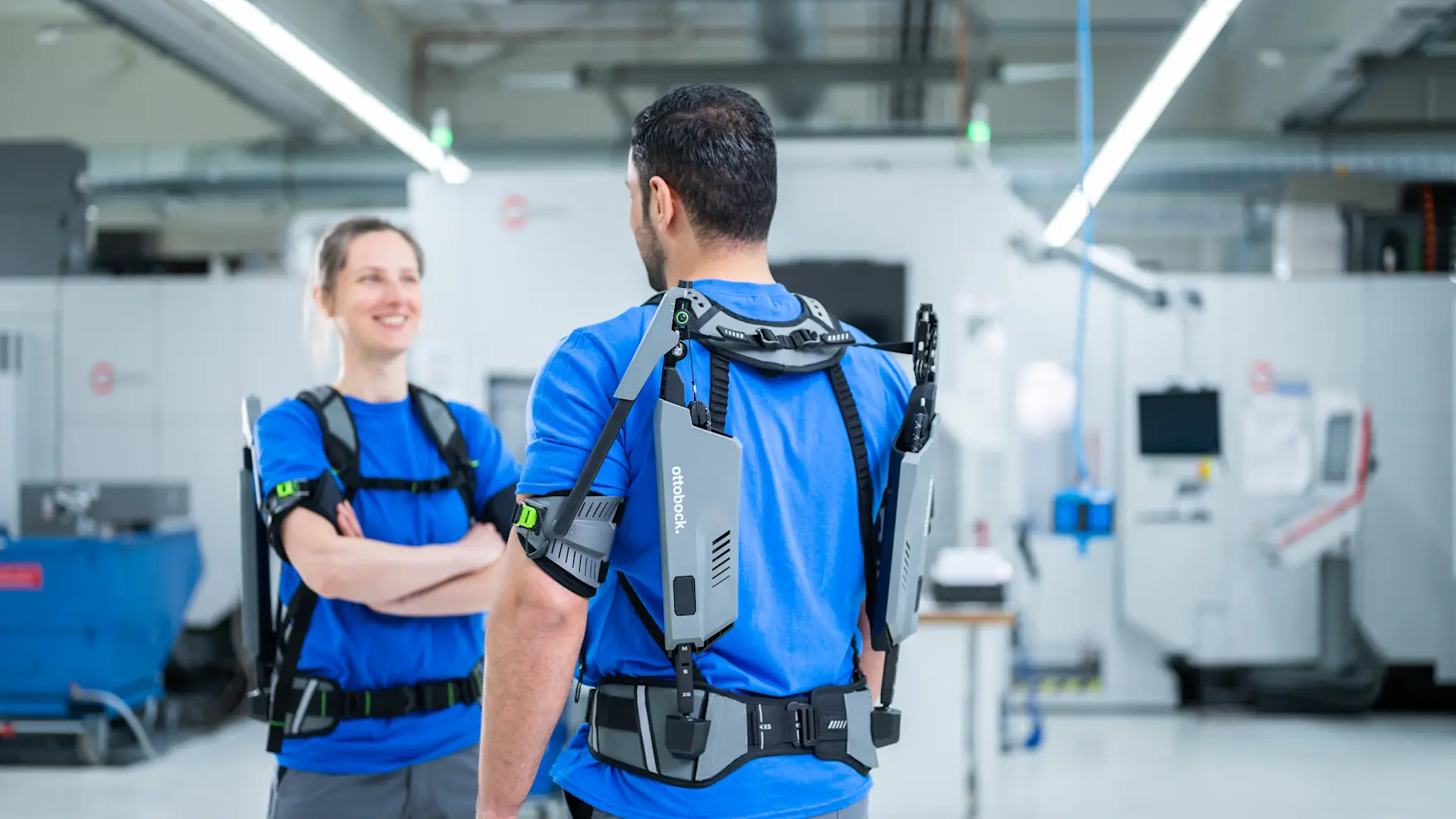
Exoskeletons: A New Era of Ergonomics and Safety in Industrial Work

Industrial and logistics jobs are undergoing rapid transformation. Rising production volumes, record e-commerce demand, tighter delivery expectations, and increasing process complexity are pushing workers and operations harder than ever before. At the same time, the availability of skilled manual labor is shrinking, absenteeism is rising, and musculoskeletal injuries continue to be one of the most persistent challenges in both logistics and manufacturing.

In this landscape, companies face a clear challenge:
How do you protect workers, maintain productivity, and ensure long-term operational stability in an environment built on physically demanding tasks?

Exoskeletons have emerged as one of the most promising answers. What was once a futuristic concept is now a practical, widely tested and rapidly adopted ergonomic solution that helps workers perform physically intensive tasks more safely, more efficiently, and with significantly less strain.

Importantly, exoskeletons are not about replacing people. They are about augmenting human capability, supporting healthy movement patterns, reducing injury risks, and making industrial work more sustainable for both workers and organizations.

Why Exoskeletons Matter Today

The rise of exoskeletons is driven by several powerful industry-wide trends.

Declining workforce availability

Warehousing, manufacturing, and logistics are facing chronic labor shortages. Fewer people are willing or able to perform physically demanding roles long term, and competition for reliable workers is intense. Companies increasingly need ways to protect and retain the talent they have.

Increase in musculoskeletal disorders (MSDs)

Injuries resulting from repetitive lifting, bending, twisting and overhead work remain one of the biggest causes of absenteeism and long-term health complications. Research shows that repetitive movements and improper lifting patterns are among the most common contributors to MSDs.

Pressure to increase productivity

With rising operational demands and tighter deadlines, companies must process more work with fewer people. The ability to support workers physically without slowing down operations becomes essential for maintaining throughput and consistency.

Growing focus on ergonomics and employee well-being

Modern organizations understand that ergonomics is not only about compliance. It is a strategic advantage. Better workplace ergonomics lead to lower turnover, fewer injuries, improved morale, and a stronger employer brand.

Exoskeletons directly address all of these challenges, making industrial work safer, more sustainable, and more resilient.

What Exactly Is an Exoskeleton?

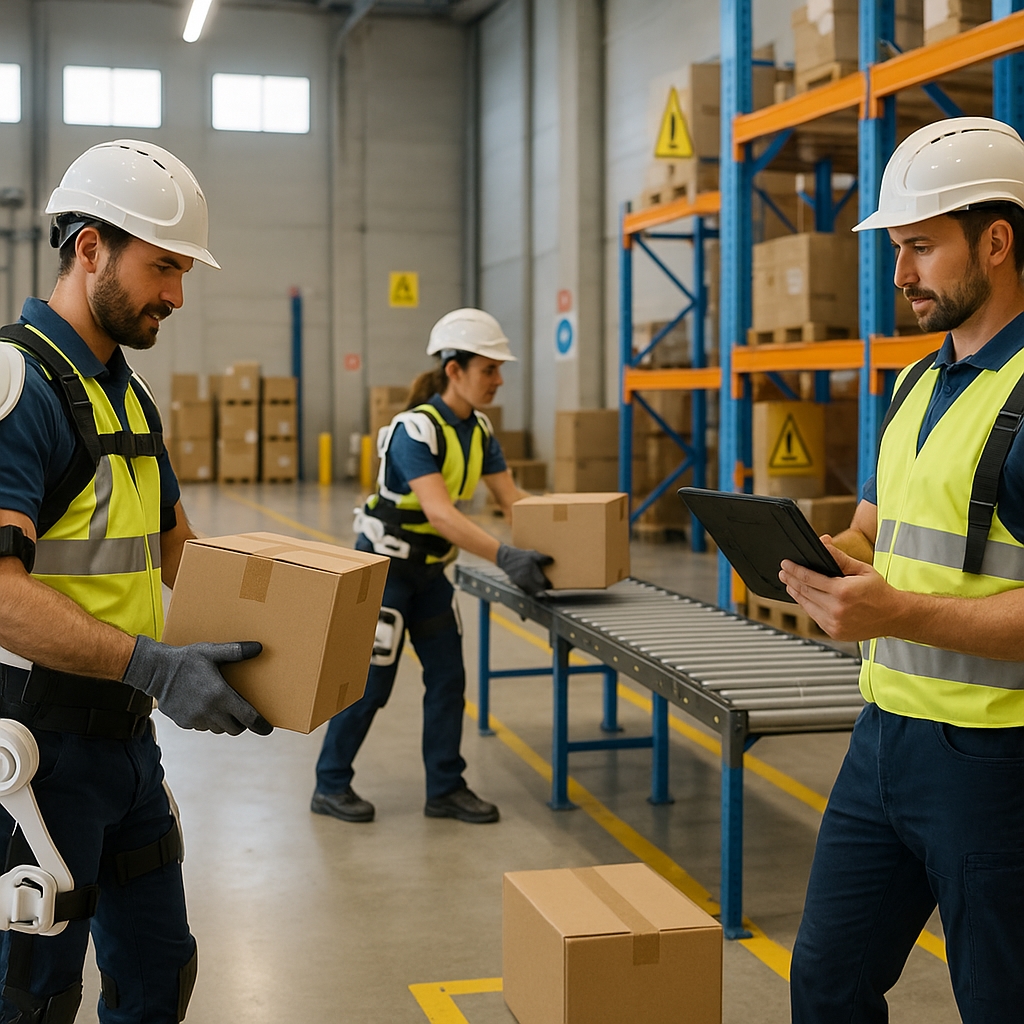
An exoskeleton is a wearable biomechanical device designed to assist workers during physically demanding activities such as lifting, bending, squatting, carrying loads, or performing tasks above shoulder height.

Unlike traditional protective equipment, which only minimizes injury after strain occurs, an exoskeleton actively reduces load on the body while the task is being performed.

Its design allows it to:

  • reduce the forces acting on muscles, joints, and the spine
  • redistribute load from the body to its mechanical structure
  • improve postural stability during demanding or repetitive movements
  • increase endurance and reduce fatigue during long shifts
  • support natural, unrestricted range of motion

Workers often describe the sensation not as being pushed, but as feeling more stable and less exhausted throughout the shift.

According to independent biomechanical studies, advanced exoskeletons can reduce muscle activation in high-load regions by 40-60%, significantly lowering strain and improving long-term endurance.

How Exoskeletons Work: The Biomechanics Behind the Support

Behind their simplicity lies a sophisticated integration of biomechanical and mechanical principles. Modern exoskeletons follow the body’s natural movement patterns while reducing strain in critical zones.

They achieve this through four core mechanisms:

Load redistribution

The external structure absorbs part of the physical load that would normally be carried by a worker’s muscles or spine. This reduces compressive forces on the lower back and decreases fatigue in major muscle groups.

Targeted support in high-strain positions

Exoskeletons do not provide support constantly. They activate assistance in positions that place the greatest stress on the body, such as bending, lifting from low positions, or working overhead. This ensures maximum protection exactly when workers need it.

Natural, intuitive movement

Through mechanical joints or sensor-driven systems, the exoskeleton synchronizes with the user’s movements. It does not restrict range of motion, allowing natural flexibility and quick adaptation to varied tasks.

Reduced fatigue and greater endurance By lowering continuous muscle activation, workers maintain precision, stability, and pace longer throughout the shift. This leads to fewer errors, greater consistency, and a better physical condition at the end of the workday.

Passive and Active Exoskeletons

Exoskeletons generally fall into two categories, each suited for different environments and intensity levels.

Passive exoskeletons

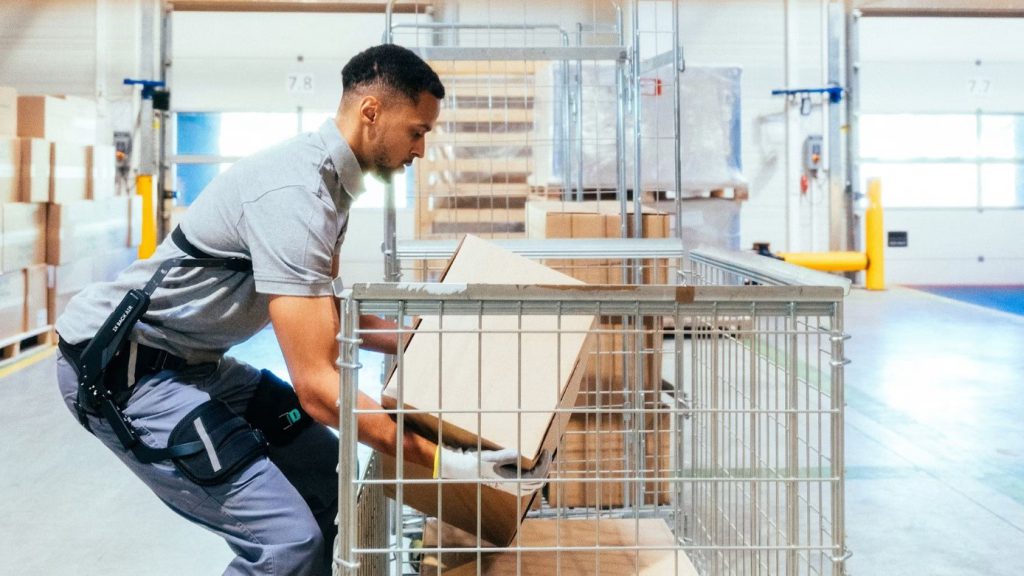
Ottobock IX BACK AIR exoskeleton

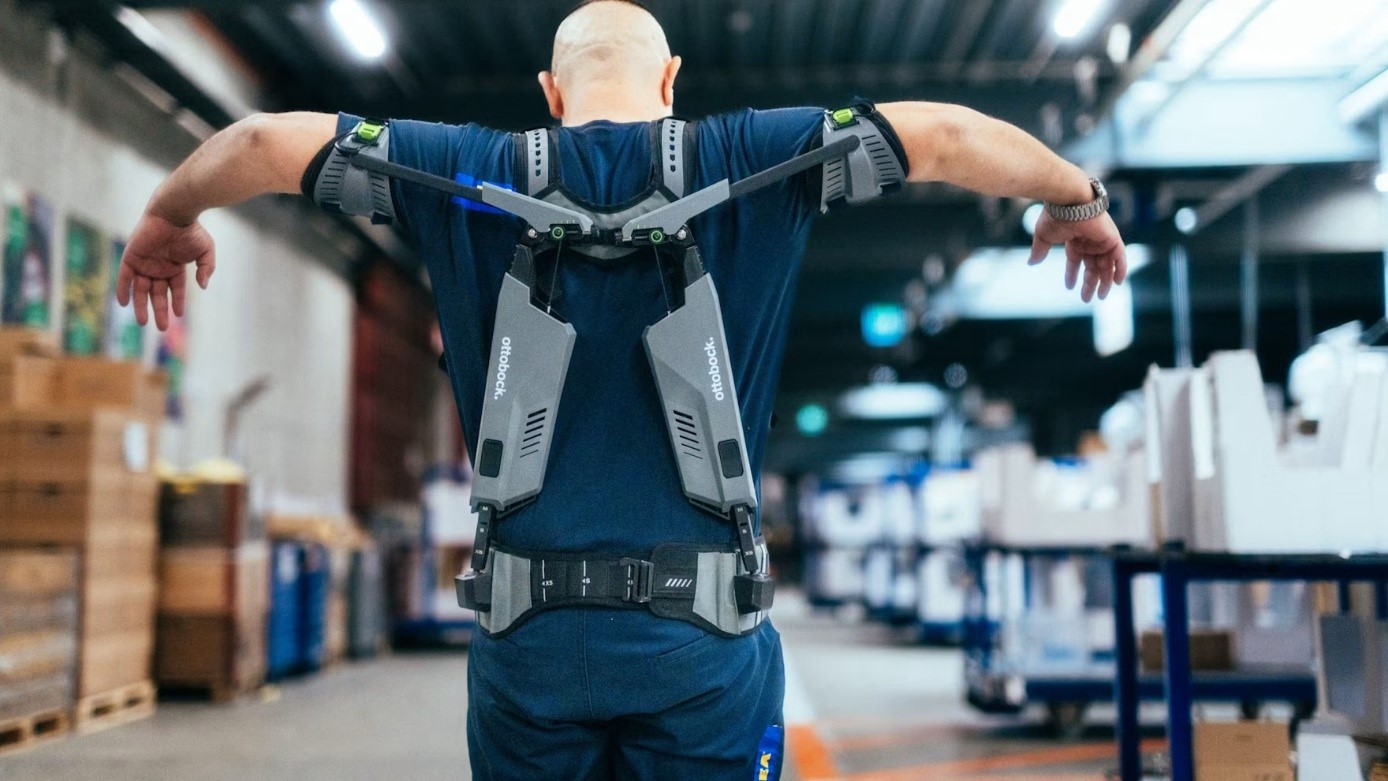
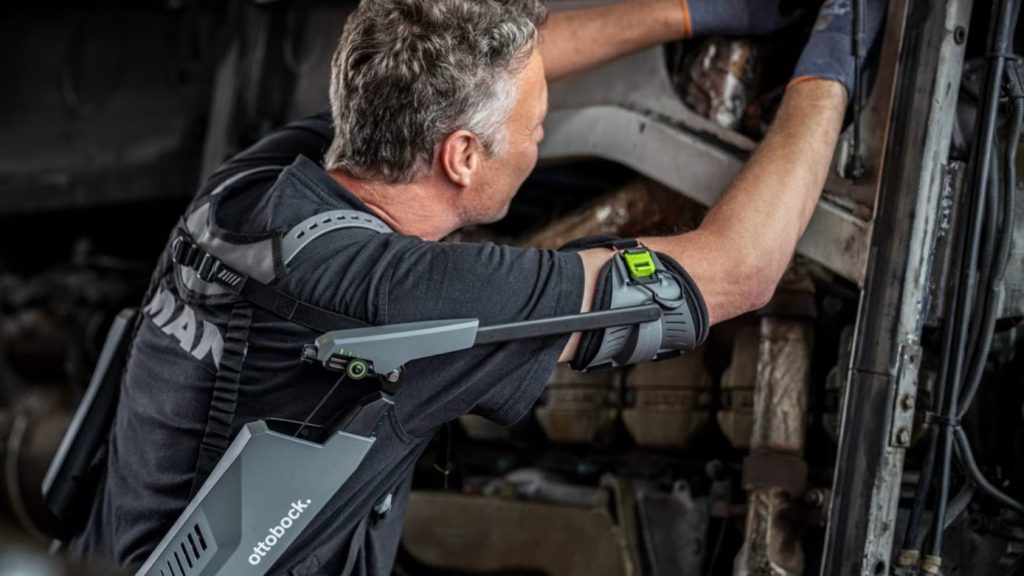
Passive exoskeletons use mechanical elements such as springs, elastic components, dampers, and levers. They require no battery power and provide support through stored mechanical energy.

Ottobock IX SHOULDER AIR exoskeleton

Benefits include:

  • low weight
  • high reliability
  • minimal maintenance
  • suitability for all-day use

They are especially popular in warehouses, logistics centers, automotive assembly, and manufacturing lines where movements are repetitive but continuous productivity is essential.

Active exoskeletons

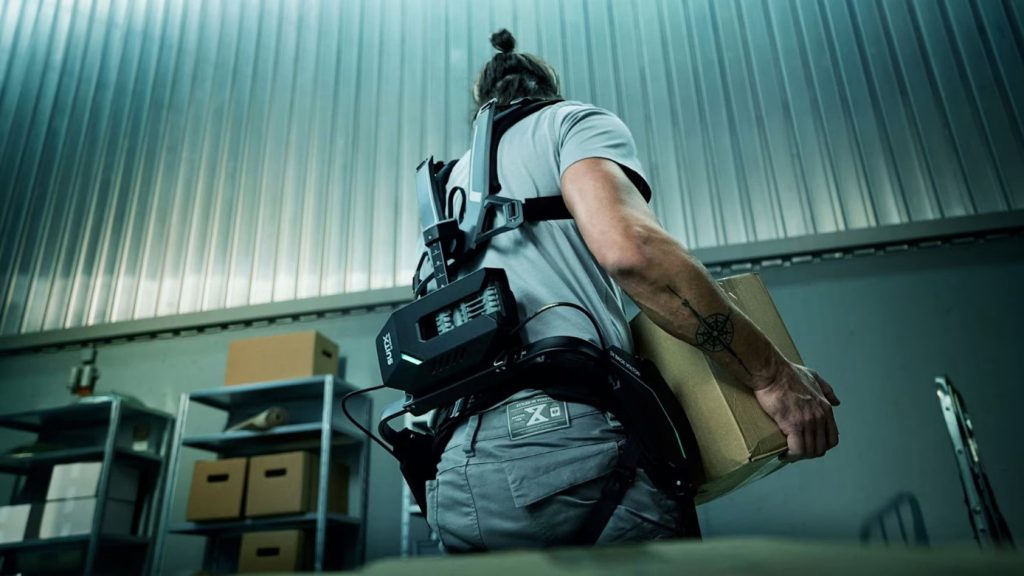
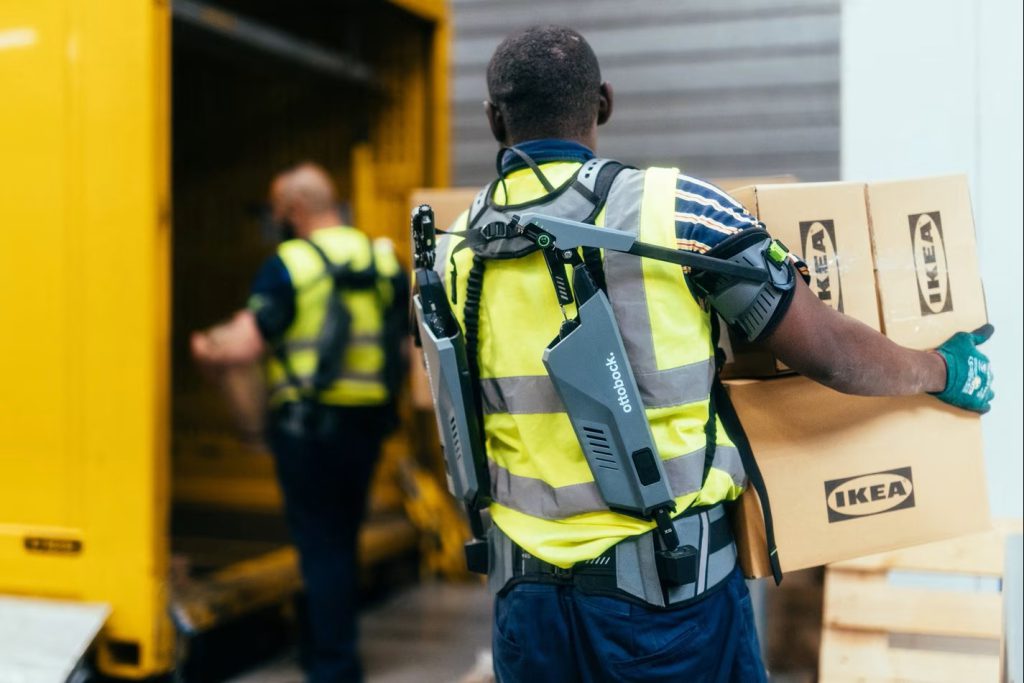
Ottobock IX BACK VOLTON exoskeleton

Active exoskeletons use electric motors, powered joints, sensors and smart control units to dynamically adjust assistance in real time. They provide stronger, more precisely targeted support, especially during heavy or high-frequency lifting tasks.

They are increasingly implemented in high-intensity industrial environments, including heavy manufacturing and construction.

Benefits for Workers and Employers

Benefits for workers

  • significantly reduced strain on back, shoulders and joints
  • improved stability and support during demanding tasks
  • sustained performance throughout long shifts
  • reduced fatigue and fewer repetitive stress injuries
  • improved long-term well-being

Benefits for employers

  • fewer workplace injuries and lower associated costs
  • reduced absenteeism and workforce turnover
  • improved productivity and throughput
  • more predictable staffing and operational stability
  • stronger positioning as a company that invests in employee safety and well-being

In industries defined by labor shortages and high physical demands, this can become a key competitive advantage.

More about the transformational potential of exosystems read in article on this link.

Conclusion

Exoskeletons represent a meaningful shift in how companies approach physically demanding work. They bridge the gap between the operational demands of modern industry and the physical limitations that often lead to injuries, fatigue, and instability.

By reducing strain, enhancing safety, and supporting long-term worker health, exoskeletons are becoming one of the most valuable tools for building a safer, more efficient, and more sustainable industrial workplace.

If your organization is considering ergonomic improvements or wants to test exoskeletons in a real operational environment, feel free to reach out to us. We can guide you through evaluation, selection, and implementation to ensure the best fit for your needs.
Our next article will dive deeper into real-world warehouse scenarios and measurable before-and-after results of exoskeleton implementation.

How WMS Integration with Couriers and Parcel Lockers Automates the Entire Shipping Workflow

In today’s fast-paced e-commerce and logistics landscape, customer expectations are higher than ever. Same-day dispatch, reliable tracking, flexible pickup options, and error-free deliveries have become the new standard rather than a competitive advantage.
Behind the scenes, however, achieving this level of speed and accuracy requires much more than manual workflows or standalone courier tools. It demands a fully connected environment where order data, shipment information, and tracking updates flow seamlessly between systems.

That’s why integrating a Warehouse Management System (WMS) with courier platforms and parcel locker networks is no longer optional — it’s a core requirement for any operation that wants to scale efficiently, reduce errors, and deliver a consistent customer experience.

Why Integration with Couriers and Parcel Lockers Matters

Without direct connection between your WMS and courier or locker networks, your shipping process still relies on manual entry and label generation.
This increases the chance of errors, delays, and extra workload.

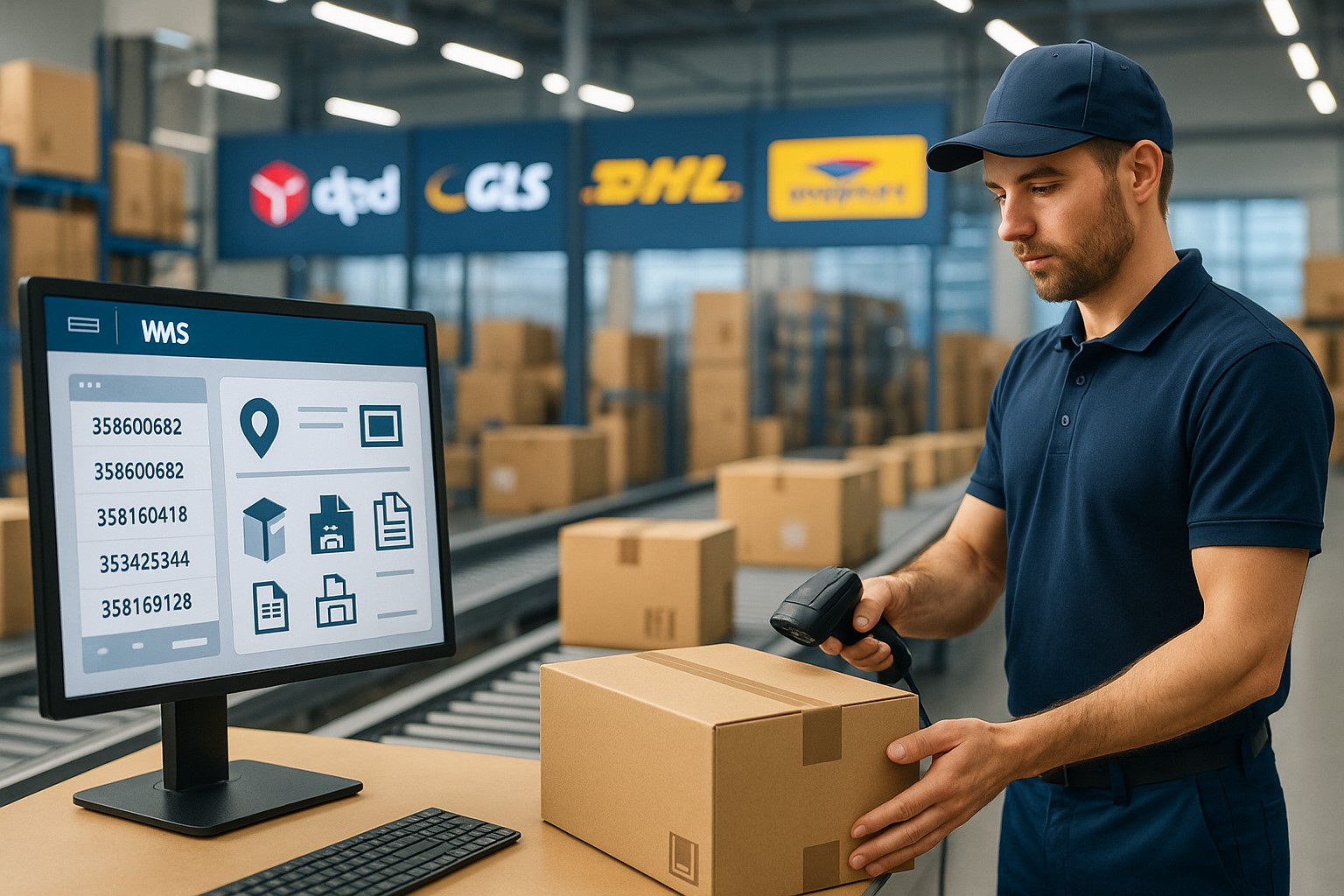
With direct integration (as in Servis24 WMS), every step — from shipment creation to delivery and locker pickup updates — happens automatically, with no human intervention.

What Courier and Locker Integration Includes

  • Automatic shipment registration and label generation
  • Tracking and pickup scheduling
  • Real-time delivery status updates
  • Return handling and notifications
  • For parcel lockers:
    • Automatic locker selection based on customer address
    • Reservation of locker space in real-time
    • Pickup confirmation when the user scans the QR code

All handled seamlessly from one interface.

Most Common Couriers and Locker Networks in Croatia & EU

Key Benefits

✅ Faster dispatching: Integrated shipping workflows automate label creation, data exchange and courier selection, significantly reducing handling time per parcel.
✅ Fewer data entry errors: Orders, customer details and shipment data flow directly from WMS to couriers, eliminating manual input and preventing costly mistakes.
✅ Full shipment and pickup visibility: Real-time tracking updates, delivery statuses and locker pickup confirmations provide complete transparency for both warehouse teams and customers.
✅ Enhanced customer flexibility: Customers can choose between home delivery, pickup points or parcel lockers, improving convenience and reducing failed delivery attempts.
✅ Cost reduction through locker deliveries: Parcel-locker networks lower last-mile delivery costs, minimize returns and reduce the operational load on warehouse dispatch teams.

Case Example

A regional e-commerce client integrated Servis24 WMS with Croatian Post and Boxnow lockers, including automated parcel locker assignment.
Result: label generation time dropped from 45s to 8s, and 70% of customers now choose parcel lockers — cutting delivery costs by 15%.

Conclusion

Courier and locker integration represents the next step in smart warehouse automation.
It connects warehouse operations directly to the last mile — ensuring faster delivery, better user experience, and measurable savings.

👉 Servis24 WMS supports major courier and parcel locker integrations in Croatia and across Europe.
If you want to automate both shipping and pickup — contact us for a live demo.


Integrating WMS with ERP, TMS and Other Systems – Best Practices and Common Pitfalls

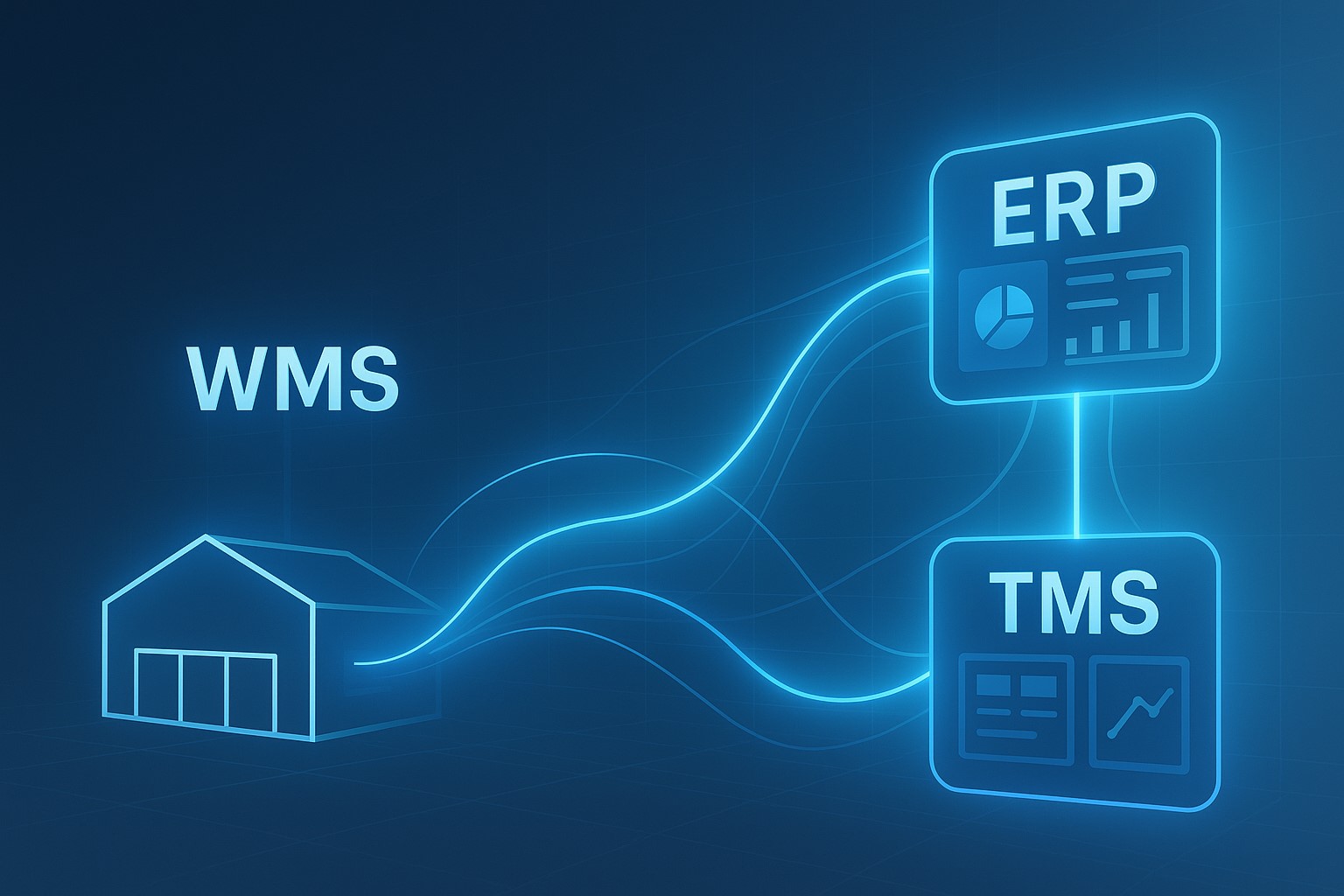
In modern supply chains, a WMS (Warehouse Management System) rarely operates alone.
Its true power is unlocked when it seamlessly connects with other enterprise systems — ERP, TMS, WCS, and BI analytics tools.

Integration between two systems means that they exchange data automatically, accurately, and in real time, without the need for manual entry or copying information from one place to another. In practice, this means that the WMS and ERP “communicate” through APIs or other integration protocols: the WMS sends information about inventory levels, receipts, and shipments, while the ERP provides orders, item master data, partners, and financial documents. This eliminates manual steps, reduces operational errors, and ensures that all systems remain synchronized at all times. Such seamless data flow enables faster decision-making, better process control, and a stable foundation for scaling the business.

Integration has become a critical success factor for every WMS implementation — but it’s also where many projects fail if not done right.

Why Integration Is Essential

Without proper integration, even the best WMS can create more problems than it solves.
If data is inconsistent between systems, the result is double entries, stock mismatches, inaccurate invoices, and incomplete reports.

A successful integration ensures a Single Source of Truth — all systems use the same accurate and up-to-date information.

Most Common Systems Integrated with WMS

1. ERP (Enterprise Resource Planning)

2. TMS (Transport Management System)

  • Handles transport planning, routes, and cost control.
  • Receives shipping and receiving data from WMS.

3. WCS (Warehouse Control System)

  • For automated systems like AutoStore, sorters, AGVs.
  • WMS manages the logic; WCS handles physical execution.

4. BI / Analytics Tools

Integration Models

1. Point-to-Point Integration

  • Direct connection between two systems.
  • Suitable for small setups but limited scalability.

2. Middleware / Integration Platform (ESB, API Gateway)

  • Central hub that manages all communication (e.g., Azure Integration Services, MuleSoft, nShift).
  • Adds flexibility, scalability, and security.

3. API-First Approach

  • Modern WMS platforms like Servis24 WMS use REST APIs for real-time integration.
  • Simplifies connectivity with ERP, mobile apps, and external services.

Common Integration Mistakes

🚫 Undefined business processes – integration starts before workflows are fully mapped.
🚫 Poor data mapping – mismatched fields between systems.
🚫 Insufficient testing – skipping sandbox and scenario validation.
🚫 Lack of logging and monitoring – errors are hard to trace post-launch.
🚫 Version mismatches – one system updates, breaking compatibility.

Best Practices for Success

Map all data flows upfront – define direction, fields, and ownership with the ERP/TMS team.
Use standardized formats (JSON, XML, EDI) – reduce maintenance effort.
Ensure bidirectional synchronization – confirmations prevent data loss.
Implement detailed logging and monitoring – Servis24 WMS logs all transactions in real time.
Adopt an iterative rollout – test and deploy in controlled phases.

Conclusion

Integrating WMS with ERP, TMS, and other enterprise systems isn’t just a technical step — it’s the foundation of a truly digital warehouse.
Properly executed, integration drives transparency, speed, and efficiency throughout the supply chain.

👉 If you’re planning to connect or upgrade your WMS, contact us to see how Servis24 WMS streamlines integration through its API-first architecture and over two decades of real-world experience.

Health and Safety in the Warehouse: The Hidden Key to Long-Term Efficiency

With the shortage of qualified warehouse workers growing across Europe, ensuring health and safety is no longer a compliance issue — it’s a strategic imperative.
Companies that invest in ergonomics, modern equipment, and employee well-being end up with lower costs, better retention, and higher productivity.

Why Health & Safety Is a Business Priority

What used to be viewed as an expense is now an investment:

  • Fewer injuries → fewer sick days
  • Better conditions → lower turnover
  • Safer environment → higher quality of work

Modern logistics leaders understand that caring for people means caring for long-term profitability.

Key Health & Safety Elements in Modern Warehousing

1. Ergonomic Workstations

  • Proper height tables, shelf positioning, and layout optimization,
  • Reduce strain on back, knees, and shoulder.s

2. Lighting and Climate Control

  • Adequate light and ventilation reduce fatigue and errors.

3. Traffic & Zone Safety Management

  • Marked walking zones, forklift sensors, restricted areas,
  • Prevent collisions and near-misses.

4. Digital Safety Monitoring

  • WMS systems (like S24 WMS) track workflows and risky zones, alerting supervisors in real time,
  • Automation reduces unnecessary manual handling.

5. Training and Safety Culture

  • Regular safety briefings and employee feedback sessions,
  • Encourage proactive reporting of potential hazards.

The Rise of Industrial Exoskeletons

One of the fastest-growing innovations in warehouse safety is the use of exoskeletons — wearable mechanical supports that reduce physical strain during lifting or repetitive tasks.

Global leaders such as Toyota, BMW, Amazon, and DHL are already investing heavily in these systems.

SuitX by Ottobock
SuitX by Ottobock Exoskeleton

Benefits include:

  • Up to 60% reduction in muscle fatigue,
  • Fewer back and shoulder injuries,
  • Higher productivity with older or less physically strong workers,
  • Improved morale and employee retention.

What once looked futuristic is now becoming a standard in top-tier logistics operations

Long-Term Impact: Safety as Strategy

Workplace safety directly impacts:

  • Costs – fewer injuries, fewer replacements
  • Productivity – faster, more consistent work
  • Talent retention – better employer reputation

Smart, safe, and digitally supported warehouses attract — and keep — the best talent.

Conclusion

Investing in safety, ergonomics, and smart technology isn’t just a matter of compliance — it’s a long-term competitive strategy.
Companies that put people first will always lead in performance, stability, and growth.

Aktiva Info supports logistics companies in digitizing and optimizing not only their warehouse processes but also the working conditions that keep employees safe, motivated, and efficient. Get in touch with us if you need any assistance or guidance.

Integration of WMS with ERP Systems: What It Looks Like in Real Life

Introduction – Why Integration Matters

Imagine a warehouse that receives dozens of pallets and ships hundreds of orders every day, constantly updating inventory levels. ERP handles procurement, sales, and finance “upstairs,” while the WMS manages physical goods movement—receiving, storage, picking, and dispatch—“downstairs.” Without integration, every manual Excel file or paper document introduces errors, delays, and unnecessary costs. That’s why WMS–ERP integration is no longer a luxury—it’s a prerequisite for fast, accurate, and profitable logistics.

A Single Source of Truth – What You Gain from WMS + ERP

With real-time data exchange between ERP and WMS, operations—ranging from supplier orders to customer invoicing—run without duplicate data entry and unnecessary manual work.

Inbound (Goods Receipt):

1. ERP receives supplier document (invoice/ASN) and sends it to WMS—warehouse gets an exact arrival forecast.

2. WMS opens a Goods Receipt document listing expected items, quantities, and LT/serial details.

3. When goods arrive, warehouse staff scan each barcode; WMS compares scanned data with expected data.

4. If correct, the GR is confirmed and closed; discrepancies (over, short, wrong LOT) are logged immediately.

5. Closing triggers automatic ERP update: inventory levels, stock values, and financial postings are updated in real time.

Outbound (Shipping):

1. ERP confirms a sales order and sends it to WMS, giving warehouse a dispatch list.

2. WMS generates a shipping order/pick list with precise warehouse locations.

3. Warehouse staff follow the pick list on Android devices, scanning locations, items, LOT/serials, and quantities—errors minimized.

4. After picking, the operator closes the shipping order: WMS assigns a shipment number, prints labels (e.g. CMR), and marks it “Sent.”

5. Shipment closure sends real quantities and shipping info back to ERP, which updates inventory, posts output, and prepares the invoice.

This two-way flow removes manual steps, speeds up processes, and ensures everyone—from warehouse to CFO—sees the same, fully updated inventory picture.

Technical Details – Integration Options

Here are the five most common integration methods, rated from fastest to most complex, with considerations for speed, security, and cost—most relevant for technical teams and ERP providers:

  • API (REST/SOAP): fastest, real-time updates via JSON/XML.
  • SFTP/FTP: secure CSV/XML exchange at intervals—but not real-time.
  • EDI (EDIFACT, ANSI X12, SAP IDoc): robust supply-chain standard—requires mapping.
  • SQL view/ODBC: direct DB reading when infrastructure supports it.
  • Note: S24 WMS supports all these methods, tailored to each client’s needs

ERPs Already Connected with Servis24 WMS

Servis24 WMS is already integrated with over 20 ERP systems, including:

If your ERP system isn’t on the list, we can typically complete a basic integration (receiving, shipping, inventory) within three to five weeks, depending on the responsiveness of the ERP provider and the urgency of the project.

Conclusion — Tangible Value for Your Company

When you connect your WMS and ERP using one of the methods described above, your logistics operations shift from being a hidden cost to a source of competitive advantage. Data flows automatically, inventory updates happen while the scanner is still lit, and every shipment leaves without stress or Excel gymnastics.

There’s less stock sitting in the warehouse, fewer people fixing errors, and more customers receiving goods exactly when expected. At the same time, management sees accurate numbers in one place — from per-item margins to shift productivity — and makes decisions based on facts, not gut feeling.

In short: clearer, leaner processes, lower costs, and faster growth.

If you’d like to learn more, feel free to contact us — we’re happy to help.

Connecting the Croatian Coast: How Tech Innovations Boost Ferry Services and Customer Experience

Introduction to the Importance of Ferry Services in Croatia

The enchanting Croatian coast, dotted with over a thousand islands, is a beautiful destination for travelers around the globe. A significant aspect of exploring this Adriatic paradise is the ferry services that seamlessly connect the mainland to these islands. For both locals and tourists, ferries are not just a mode of transport but a gateway to adventure, culture, and clear beauty.

However, the traditional methods of operating and booking ferry services have posed challenges, including limited accessibility and inefficiencies. Fortunately, technological advancements are now playing a crucial role in bridging these gaps, creating a more connected and efficient ferry network across the Croatian coast.

The Tech Innovation: Connecting Croatian Coast with Global Ferry Operators

At the heart of this transformation is our cutting-edge technology that connects Croatian ferry services with global ferry operators. Through our robust API, we’ve integrated with some of the leading ferry booking platforms worldwide, including:

These integrations ensure that travelers have a seamless and efficient booking experience, enhancing the overall accessibility and convenience of ferry services along the Croatian coast.

Global Ferry Booking Engines

How It Works: A Detailed Insight into the Platform

Our platform operates on an advanced API system that seamlessly integrates the ticketing systems of local Croatian ferry companies with international ferry booking platforms. Here’s a breakdown of how it works:

1. API Integration: Our API (Application Programming Interface) connects with the digital ticketing systems of local ferry operators. This connection enables real-time updates and synchronization of schedules, availability, and pricing.

2. Global Access: Through this API, platforms like Ferryhopper and Ferryscanner can access and display the schedules and tickets of Croatian ferry companies to their global user base.

3. Booking and Confirmation: Travelers can book their ferry tickets via their preferred platform, and the transaction details are instantly communicated to the local ferry company’s system. This ensures a smooth and efficient booking process with immediate confirmation.

By leveraging this technology, we are breaking down barriers and making Croatian ferry services accessible to a broader audience.

Benefits for Local Ferry Companies

The local ferry companies, such as Kapetan Luka – Krilo, TP Line, KSC, and Adriatic Lines by Kompas Travel, stand to gain significantly from these integrations. By connecting their services with international booking platforms, these companies can reach a much wider audience and attract tourists who might not have found their services otherwise.

The integration of our technology brings numerous advantages to local ferry operators, including:

Increased Revenue: By tapping into the global market, local ferry companies can significantly boost their ticket sales and revenue streams.

Operational Efficiency: Automated processes and real-time updates reduce manual workload and improve overall efficiency.

Broader Reach: Access to international platforms means a wider audience of travelers who can easily discover and book ferry services in Croatia.

Enhanced Analytics: Operators gain valuable insights into booking patterns and customer preferences, enabling data-driven decisions for service improvements.

Local ferry operators benefiting from API integrations

Enhanced Travel Experiences for Tourists and Locals

For travelers, both local and international, the integration of Croatian ferry services with global booking platforms translates to a superior travel experience:

Convenience: Easily book ferry tickets from anywhere in the world using familiar platforms.

Transparency: Access to real-time information on schedules, prices, and availability ensures informed decision-making.

Reliability: Instant booking confirmations and reduced chances of overbooking or scheduling conflicts.

Exploration: Encourages exploration of lesser-known islands and destinations, enriching the overall travel itinerary.

Conclusion: The Significance of Tech in Tourism

In conclusion, technology is revolutionizing the way ferry services operate along the Croatian coast. By connecting local ferry companies with global operators through our API, we are not only boosting revenue but also significantly improving the customer experience. This integration is a testament to the power of tech in revitalizing traditional industries and creating a more connected, efficient, and enjoyable world for travelers.

We are especially proud that we can help improve Croatian tourism. Our technological solutions enhance the overall travel experience, encouraging more people to explore the beauty of Croatia’s stunning coastline and islands.

Get Involved

If you are a ferry operator, we invite you to reach out to us to explore potential cooperation opportunities and enhance your services. Similarly, if you are a local provider, contact us to get more information about our technological solutions and how they can benefit your operations. Together, we can make the Croatian coast more accessible and enjoyable for everyone.

Announcing Our New Client: Adriatic Lines by Kompas Travel

A New Chapter in Travel Ticketing Innovation

We are happy to announce an exciting development at Aktiva Info! We have partnered with Adriatic Lines by Kompas Travel, a renowned player in the tourism industry, to bring cutting-edge ticketing solutions to their operations. This collaboration marks a significant milestone as we launch our first international line: the Poreč-Venezia route.

Transforming Ticketing with Advanced Technology

Kompas Travel’s migration to our state-of-the-art ticketing software promises unparalleled benefits and new sales channels. Our system is designed to streamline operations, enhance customer experience, and boost overall sales. Here’s a breakdown of how our solutions are set to revolutionize Kompas Travel’s ticketing process:

1. Comprehensive Sales Channels

Leveraging our ticketing software, Kompas Travel will now be able to offer tickets through multiple channels:

  • Website Sales: A user-friendly online portal developed by 3rd party agency that allows passengers to book tickets seamlessly: https://adriatic-lines.com/ .
  • Android Mobile Sales Stations: Portable sales stations that bring flexibility and convenience to ticketing operations, enabling them to sell tickets literally from anywhere.
  • API Connections: Integration with the biggest global ferry aggregators, such as Ferryhopper, Ferryscanner, Direct Ferries, etc., expanding reach and maximizing sales opportunities.
  • Desktop Sales for Agency Offices: A robust desktop application for agency offices, ensuring efficient ticket sales and management.

2. Enhanced Control Over Boarding Processes

Our ticketing software offers complete control over the boarding process, ensuring a smooth and secure experience for both passengers and staff:

  • Passenger Verification: Each passenger is carefully checked and verified before boarding, enhancing security measures.
  • Manifest Information: Real-time transmission of passenger information via manifests via web-service to the ports of destination, facilitating better coordination and safety.

The Poreč-Venezia Line: Our First International Route

We are particularly excited to debut our services on the Poreč-Venezia line. This route not only symbolizes our first foray into international travel but also highlights our commitment to expanding our reach and capabilities. Kompas Travel has long been a trusted name in the tourism sector, and we are honored to support their growth and success with our advanced ticketing solutions.

Kompas Prince of Venice Ferry can accommodate up to 300 passengers.

Why This Matters to the Tourism Industry

The tourism industry thrives on efficiency, reliability, and customer satisfaction. By adopting our ticketing software, Kompas Travel is setting a new standard for travel operations. Here’s why this partnership is a game-changer for the tourism sector:

  • Streamlined Operations: Our technology simplifies complex ticketing processes, reducing operational costs and time.
  • Improved Customer Experience: With multiple sales channels and seamless boarding procedures, passengers enjoy a hassle-free travel experience.
  • Increased Sales Opportunities: Expanded sales channels and global integrations mean more opportunities for revenue growth.

Join Us on This Journey

As we embark on this exciting journey with Kompas Travel, we invite other leaders in the tourism industry to explore the transformative potential of our ticketing software. Whether you operate a ferry service, tour company, or travel agency, our solutions are designed to meet your unique needs and drive your business forward.

For more information on how our ticketing system can benefit your organization, please contact us today. Let’s redefine travel ticketing together.

Stay tuned for more updates as we continue to innovate and expand our services in the tourism sector. Thank you for being part of this journey with us.

Revolutionizing Pallet Production in Croatia: Lagermax and S24 WMS Software Case Study

In the fast-paced world of logistics, efficiency and precision are crucial. As industries continue to evolve, so too must the tools and technologies that support them. This is especially true in the domain of warehouse management and supply chain operations. Today, we’re happy to share an interesting case study from Lagermax Logistics Croatia, showcasing how they implemented their pallet production process with the help of our S24 WMS software.

The Challenge: Streamlining Pallet Production

Lagermax understood that before starting physical production, they needed a reliable system and software in place. They anticipated that the main challenge would be the lack of an integrated solution to efficiently manage their inventory and operations. They predicted potential bottlenecks in production, leading to delays and higher operational costs, and, additionally, they expected that manual tracking and error-prone data entries would result in inaccuracies, hurting productivity. This foresight made it clear that a robust warehouse management system was necessary to streamline processes and boost efficiency. Given our successful track record with WMS implementations within the Lagermax group, they decided to use our software to manage this process.

Diverse Range of Wooden Pallets

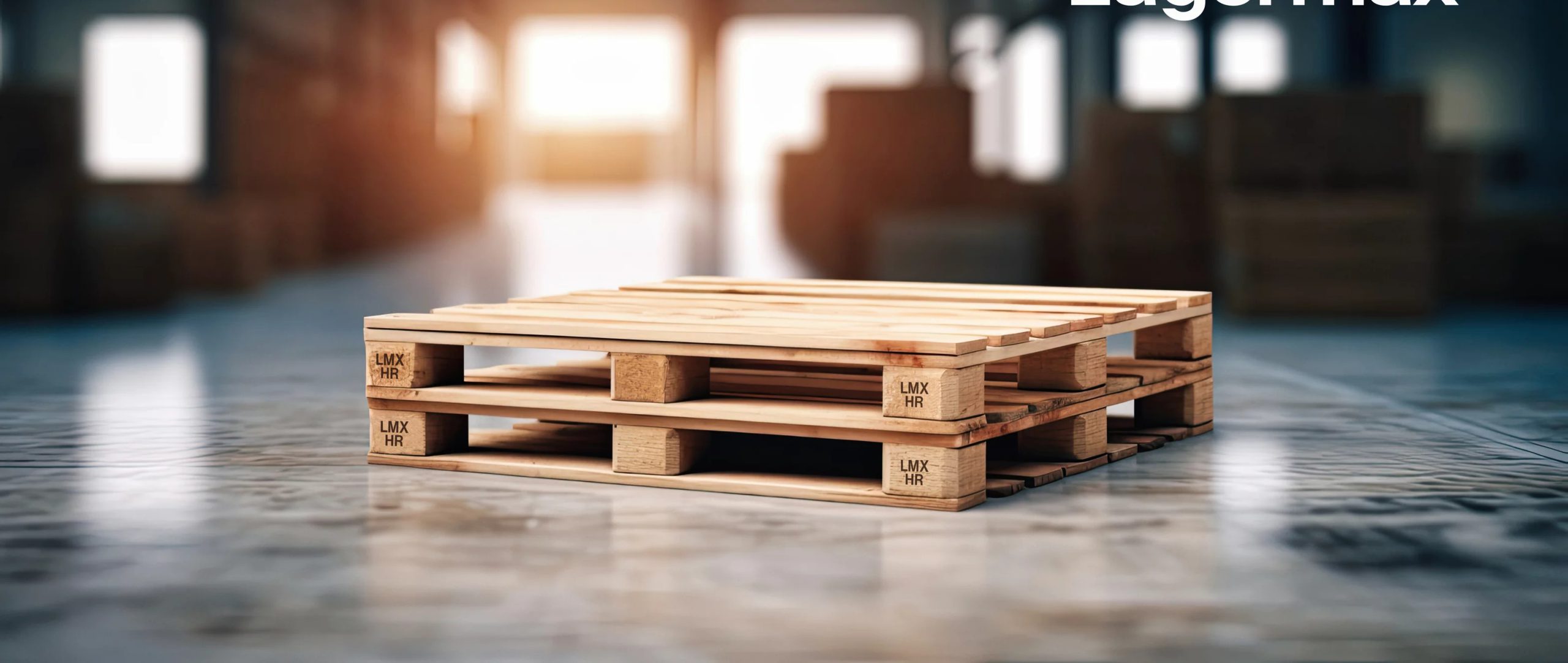
Lagermax Logistics Croatia produces various types of wooden pallets to cater to different industry needs. Among these, the most popular is the euro pallet (EPAL), which is widely recognized for its standard dimensions of 1200 x 800mm and 1200 x 1000mm. These pallets generally weigh between 20 and 25 kilos, making them both sturdy and manageable for a range of logistics applications. The euro pallet’s consistent size and weight ensure compatibility with a wide array of warehousing and transportation systems, enhancing overall efficiency and reducing handling time.

Recognizing the critical role that pallets play in supply chain management, Lagermax aimed to ensure that their production process was as efficient and transparent as possible. This is where our S24 WMS software came into play.

Tracking the Journey: From Raw Materials to Finished Pallets

Inbound Tracking of Raw Materials

The journey begins with the inbound tracking of raw materials. Our S24 WMS software meticulously tracks every piece of incoming material, ensuring that nothing is lost or misplaced. By scanning materials upon arrival, the system updates Lagermax’s inventory in real-time, allowing warehouse managers to maintain precise records of available resources.

Working Orders for Pallets

Once the raw materials are safely logged into the system, working orders for pallet production can be issued. The production module within the S24 WMS software plays a crucial role here. It allows managers to create detailed work orders that specify exactly how the pallets should be constructed. Each step in the manufacturing process is tracked and logged, providing a comprehensive overview of the entire operation.

Real-Time Production Tracking

As pallets are constructed, the S24 WMS software continues to track their progress in real-time. This level of transparency ensures that any delays or issues can be quickly identified and addressed. Additionally, by maintaining a real-time log of the production process, Lagermax can perform quality control checks at each stage, ensuring that every pallet meets their high standards.

Storing Finished Pallets in the Warehouse

Once the pallets are completed, they need to be stored efficiently in the warehouse. Our S24 WMS software streamlines this process by generating optimal storage locations based on current inventory levels and warehouse layout. This not only maximizes storage space but also ensures that pallets can be easily retrieved when needed, further enhancing operational efficiency.

Seamless Integration with Lagermax ERP System

One of the standout features of our S24 WMS software is its seamless integration with Lagermax’s ERP system. This integration ensures that all data related to pallet production, including raw material usage, production timelines, and finished goods inventory, is automatically updated in real-time within the ERP system.

Benefits of ERP Integration

1. Real-Time Data Exchange: All data related to pallet production is exchanged in real-time, eliminating the need for manual data entry and reducing the risk of errors.

2. Enhanced Bookkeeping: By keeping all records up-to-date, Lagermax can maintain accurate bookkeeping, which is crucial for financial reporting and auditing purposes.

3. Improved Decision Making: With access to real-time data, managers can make informed decisions quickly, improving overall operational efficiency.

Conclusion: The Future of Pallet Production

Lagermax Logistics Croatia has set a new standard in pallet production with their innovative use of our S24 WMS software. By leveraging the power of real-time tracking and seamless ERP integration, they have created a production process that is both efficient and transparent. This case study serves as a testament to the transformative potential of advanced warehouse management systems in the logistics industry.

Interested in revolutionizing your warehouse operations? Contact us today to learn more about how our S24 WMS software can help you achieve new levels of efficiency and precision in your business.

Need pallets? Contact Lagermax today!

5 Essential Benefits of Mobile Dimensioning Devices for the Modern Supply Chain

In today’s fast-paced world, the efficiency and accuracy of measuring parcels, pallets, and packages have become more crucial than ever for warehouses and companies in the shipping industry, including giants like DPD and DHL. The advent of mobile dimensioning devices has revolutionized the way measurements are taken, offering various benefits that enhance operational efficiency, accuracy, and ultimately profitability. This blog post explores why it’s important to measure all parcels accurately and the benefits mobile dimensioning devices bring to warehouses and shipping companies.

The Importance of Accurate Measurement in Today’s Logistics Landscape

Accurate measurement plays a pivotal role in the logistics and supply chain industry. It not only ensures that space is utilized effectively but also helps in accurate billing, preventing revenue loss. With e-commerce growth, the volume of parcels and packages being shipped daily has skyrocketed, making traditional methods of measurement time-consuming and prone to errors. This is where mobile dimensioning devices come into play, offering a solution that is both time-efficient and accurate.

1. Enhanced Efficiency and Time-Saving

Mobile dimensioning devices significantly reduce the time it takes to measure parcels and pallets. Traditional methods involve manual measurements and data entry, which are not only slow but also increase the likelihood of human error. Mobile dimensioning devices, on the other hand, can quickly and accurately capture dimensions, allowing for more parcels to be processed in less time. This efficiency is critical for warehouses that handle thousands of parcels daily and for shipping companies striving to meet delivery deadlines.

2. Increased Accuracy and Reduced Errors

Accuracy is paramount in the supply chain and logistics industry. Incorrect dimensions can lead to wasted space, improper shipping charges, and ultimately dissatisfied customers. Mobile dimensioning devices use advanced technology to ensure that measurements are precise, reducing the risk of errors. This accuracy is beneficial for optimizing load planning and maximizing the use of transport and storage space.

3. Optimized Space Utilization

Proper space utilization is key to maximizing efficiency in warehouses and during transportation. Mobile dimensioning devices help companies accurately measure and record the size of parcels and pallets, enabling better planning and organization. This optimization of space can lead to reduced shipping costs and improved overall logistics efficiency.

4. Improved Billing Accuracy

Accurate measurements are crucial for correct billing. Underestimating dimensions can lead to revenue loss, while overestimating can result in overcharging and customer dissatisfaction. Mobile dimensioning devices ensure that billing is based on precise measurements, fostering transparency and trust between shipping companies and their clients.

5. Competitive Advantage

In a highly competitive market, companies that leverage technology to improve their operations can gain a significant advantage. Mobile dimensioning devices not only enhance efficiency and accuracy but also demonstrate a company’s commitment to using innovative solutions to provide better service. This can be a differentiating factor that attracts more customers, especially those who value reliability and precision.

Conclusion

The integration of mobile dimensioning devices into the supply chain and logistics operations offers numerous benefits, from improved efficiency and accuracy to optimized space utilization and billing accuracy. For supply chain professionals, procurement specialists, and distribution specialists, understanding and adopting this technology can lead to significant improvements in operations, customer satisfaction, and competitiveness. In an era where accuracy and efficiency are more important than ever, mobile dimensioning devices are no longer just an option; they are a necessity for staying ahead in the logistics and shipping industry.

Affordable Solution – Cubetape C200S

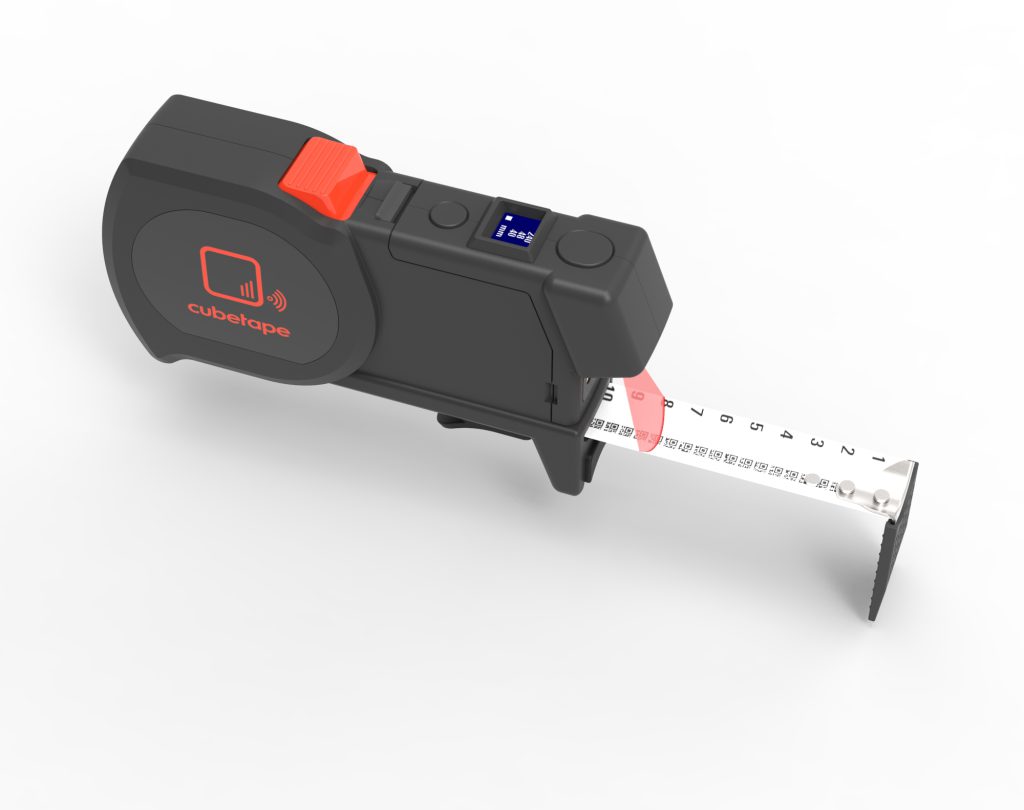
One tool that has gained popularity in recent years for its ability to accurately and efficiently measure various objects is the Cubetape C200s. This innovative device utilizes advanced laser technology to automatically measure length, width, and height of items with just a push of a button. The compact design makes it easy to carry around and use in different settings, from construction sites to home projects. The Cubetape C200s also features a large digital display that shows measurements in multiple units, making it convenient for users who work with different measurement systems. With its precision and convenience, the Cubetape C200s is a valuable tool for anyone looking to save time and effort when measuring objects.

Get in Touch With Us

If you are interested in learning more about our products and services, please do not hesitate to contact us for a demo. Our team will be happy to provide you with all the information you need. Don’t miss out on the opportunity to see firsthand how our solutions can benefit your business. So what are you waiting for? Contact us now and schedule a demo!

Revolutionizing Logistics in Croatia: Introducing the Cubetape c200s Smart Tape

In the fast-paced world of logistics and supply chain management, precision, efficiency, and innovation are not just goals—they are necessities. At Aktiva Info, we understand these imperatives deeply, which is why we are happy to announce an exciting addition to our product portfolio that promises to transform how logistics professionals in Croatia approach their operations. We are now the official distributor of Cubetape products in Croatia, including the groundbreaking Cubetape c200s Smart Tape.

What is Cubetape?

Cubetape is a game-changer in the realm of logistics, distribution, and packaging. It’s not just any tape measure; it’s a smart, portable, and highly durable device designed to make dimensioning and data capture seamless and error-free. The Cubetape c200s Smart Tape, in particular, stands out for its ability to accurately measure parcels and pallets of any shape and size, instantly transferring measurements via Bluetooth to a logistics management system, or any other similar business software.

How to use Cubetape?

Using the Cubetape C200s is very simple. The user just needs to pull the tape/measure along the object being measured, click the button to activate the barcode scanner, and the device automatically registers the dimensions and transfers the data to an Android or Windows connected system via Bluetooth. This feature makes the measurement process extremely fast and eliminates the need for manual data entry, reducing the possibility of errors and the time needed to process a larger number of packages.

The Benefits of C200s

The introduction of smart tapes like Cubetape c200s into the logistics and supply chain industry brings a multitude of benefits. Here’s how these innovative devices are setting new standards:

Enhanced Accuracy

The precision of Cubetape ensures that measurements are exact, reducing errors in shipping cost estimations and improving overall operational efficiency.

Streamlined Operations

With real-time data transfer capabilities, Cubetape eliminates the need for manual data entry, speeding up the processing time and allowing for quicker decision-making.

Cost Savings

Accurate measurements mean optimized space utilization in shipping containers and vehicles, leading to significant cost savings in transport and storage.

Improved Customer Satisfaction

Faster and more reliable shipping estimates improve transparency with customers, enhancing their trust and satisfaction with your services.

Integration

Cubetape easily integrates with existing Warehouse Management Systems (WMS) and Transportation Management Systems (TMS), enabling seamless data exchange. If you don’t have business software, you can also use the Cubetape Android and Web applications.

How Cubetape c200s Can Benefit Your Business

Whether you operate in logistics, distribution, or any business that involves package handling and shipping, the Cubetape c200s Smart Tape can deliver substantial improvements to your operations. Here’s how:

  • For Logistics Professionals: Gain real-time insights into parcel sizes and weights, allowing for more efficient route and load planning.
  • For Supply Chain Managers: Enhance inventory accuracy and warehouse space utilization, leading to improved supply chain visibility and agility.
  • For Packaging Businesses: Provide precise packaging solutions tailored to product dimensions, reducing material waste and costs.

Join the Revolution

The logistics and supply chain industry in Croatia stands at the brink of a significant transformation with the introduction of the Cubetape c200s Smart Tape. At Aktiva Info, we are proud to lead this change, offering our clients the tools they need to excel in a competitive marketplace.

We invite you to explore the benefits of Cubetape and how it can elevate your business operations. For more information on the Cubetape c200s Smart Tape and how to integrate this innovative solution into your workflow, contact us today. Together, we can redefine the future of logistics in Croatia.